
Blogs
Hreflang, ccTLDs & Subfolders: A Barcelona Guide to Multi-Country SEO

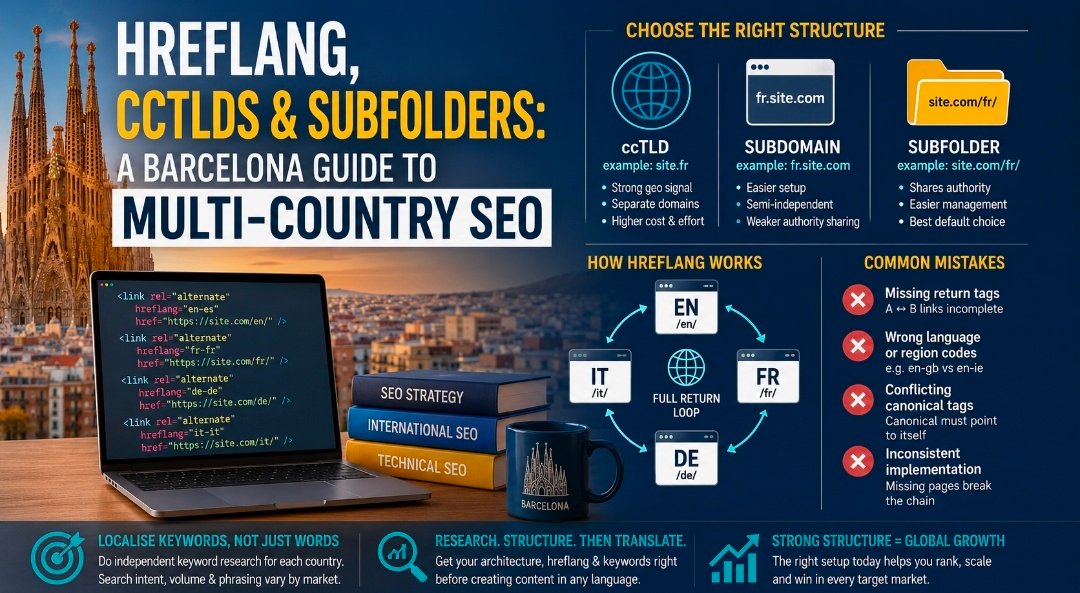
International SEO is a structural discipline, not a translation task. A business expanding from Barcelona into France, Germany or Italy needs a domain structure, correct hreflang implementation and market-specific keyword research before a single sentence gets translated. Skipping structure and going straight to translation is the single most common reason multi-country websites fail to rank outside their home market.
This guide covers the three domain structures available for international expansion, how hreflang tags actually work, the mistakes that break them most often, and why translating keywords word-for-word undermines rankings even when the grammar is perfect.
Translation Is Not International SEO
A translated page and a localised page are different products. Translation converts words from one language to another. Localisation adjusts the underlying search strategy for a different market: different search volumes, different phrasing, different competitors and different intent signals.
Search engines evaluate a page against what people in that specific market actually type into the search bar. French users searching for a service rarely use the literal French translation of the English keyword a business ranks for at home. They use their own phrasing, shaped by local habits, regional vocabulary and country-specific search behaviour. A page built by translating English copy word-for-word targets the wrong queries from the outset, regardless of how fluent the translation reads.
International SEO treats each target country as a separate research project. That means separate keyword research, separate competitor analysis and separate content decisions for every market a business enters, not one master page copied across languages.
Choosing a Domain Structure
Three structures exist for organising international content: the country-code top-level domain (ccTLD), the subdomain, and the subfolder. Each sends different signals to search engines and carries different costs.
A ccTLD uses a country-specific extension, such as site.fr for France or site.de for Germany. Search engines treat a ccTLD as the strongest possible geographic signal: Google associates site.fr with France automatically, independent of any other setting. The trade-off cost and complexity. Each ccTLD is a separate domain that needs its own hosting consideration, its own backlink profile built from scratch, and its own maintenance. A business entering ten countries under this model runs ten effectively separate websites.
A subdomain structure places country content on a prefix of the main domain, such as fr.site.com. Search engines generally treat subdomains as semi-independent from the root domain, which means authority built on the main site does not transfer fully to each subdomain. Subdomains are easier to set up than ccTLDs and easier to assign to regional teams or separate hosting, but they inherit the weaker authority-sharing problem without gaining the strong geographic signal a ccTLD provides.
A subfolder structure nests country content inside the main domain, such as site.com/fr/. This is the structure most businesses expanding internationally should default to. A subfolder inherits the authority, backlink profile and domain trust of the root domain immediately, because search engines treat it as part of the same site. Setup is simple: one hosting environment, one technical infrastructure, one set of core web vitals to maintain. The only drawback is a marginally weaker geographic signal compared with a ccTLD, a gap that hreflang tags and a country-targeting setting in Google Search Console close almost entirely.
For a Barcelona business expanding into two, three or five European markets at once, the subfolder structure wins on cost, speed and shared authority. The ccTLD model only earns its cost when a business needs full legal, hosting or brand separation by country, which is rare for a service business scaling across the EU.
How Hreflang Works
Hreflang is an HTML attribute that tells search engines which language and country a specific page targets, and which equivalent page to show users in other languages or regions. It solves a structural duplicate-content problem: multiple pages covering the same topic in different languages would otherwise compete against each other in search results.
A hreflang tag follows this pattern: a link element with rel set to alternate, hreflang set to a code such as fr-fr, and an href pointing to the matching page. The language code comes first (fr for French), followed by the country code (fr for France), separated by a hyphen. Every page in a set must declare its own hreflang tag and list every other language version of that same page, including a self-referencing tag pointing to itself.
The tags must form a complete return loop. If the English page links to the French page via hreflang, the French page must link back to the English page via hreflang, and every other page in the set must link to every other page. A one-directional hreflang tag is invalid and search engines disregard it.
Common Hreflang Mistakes
Four errors account for most hreflang failures on multi-country sites.
- Missing return tags. Page A references Page B, but Page B does not reference Page A back. Search engines require the full loop; a broken link in either direction invalidates the relationship between those two pages.
- Wrong language or region codes. Using “en-gb” for a page meant to target English speakers in Ireland, or “es” alone when the intent is specifically Spain rather than all Spanish-speaking markets, sends the tag to the wrong audience. Language codes follow ISO 639-1; country codes follow ISO 3166-1 Alpha 2.
- Conflicting canonical tags. A page’s canonical tag must point to itself when hreflang is in use. A canonical tag that points to a different language version tells search engines to treat that page as a duplicate rather than a distinct market version, which cancels the hreflang signal entirely.
- Inconsistent implementation across the set. Hreflang tags placed on some pages in a cluster but not others create a broken chain. Every page in the set needs the complete list of alternates, not just the pages that were updated most recently.
Testing hreflang after every deployment catches these errors before they affect rankings. A tag audit across the full site, not a sample of pages, is the only reliable way to confirm the return loop holds everywhere.
Localise Keywords, Not Just Words
Keyword localisation starts with independent research in the target market rather than a translated list from the home market. A term with strong search volume in Spain can have negligible volume in France under its literal translation, while a completely different phrase carries the actual demand.
Search intent also shifts by country. A service that ranks under an informational query in one market can rank under a commercial, ready-to-buy query in another, which changes what the page needs to say and how it needs to be structured. Local competitors, local terminology and local regulatory language all factor into which keywords carry real opportunity in each country.
A Barcelona business planning a multi-country expansion benefits from treating structure as the first decision, not the last. Domain architecture, hreflang implementation and market-specific keyword research need to be settled before content production starts, because retrofitting structure onto an already-live multi-language site is slower and more error-prone than building it correctly from the outset. SEO for expanding into new countries covers this structural planning stage directly, from domain choice through to hreflang audits.
FAQ
Is a subfolder always better than a ccTLD for international SEO? A subfolder is the stronger default for most businesses because it inherits the root domain’s authority immediately, though a ccTLD earns its cost when full legal or brand separation by country is required.
Does hreflang guarantee a page will rank in the target country? No, hreflang only tells search engines which page version to show for which audience; it does not influence rankings on its own, and the underlying content and keyword targeting still determine ranking performance.
Can one hreflang tag cover multiple countries that share a language? Yes, a language-only code such as “es” targets all Spanish-speaking regions collectively, while a language-country pair such as “es-mx” targets Mexico specifically, and businesses should choose based on whether content actually differs by country.
What happens if a canonical tag conflicts with a hreflang tag? The canonical tag overrides the hreflang relationship and search engines treat the page as a duplicate of the canonical target, which is why each language version needs a self-referencing canonical tag.
How many countries should a business target before setting up hreflang? Hreflang is worth implementing from the first additional country a business targets, since the duplicate-content risk between language versions exists as soon as a second market page goes live.
Should keyword research be repeated for every new country? Yes, search volume, phrasing and intent vary by country even within the same language, so keyword research needs to be done independently for each target market rather than reused across borders.
Bottom Line
Multi-country SEO succeeds or fails on structure first. A Barcelona business expanding into new European markets needs the domain structure decided, the hreflang tags fully looped and validated, and the keyword research done independently for each country before translation begins. Armen Andonian frames this as a sequencing problem: get the architecture right, and the content built on top of it has a real chance to rank; skip the architecture, and even excellent translated content competes against itself across markets instead of winning new ones.
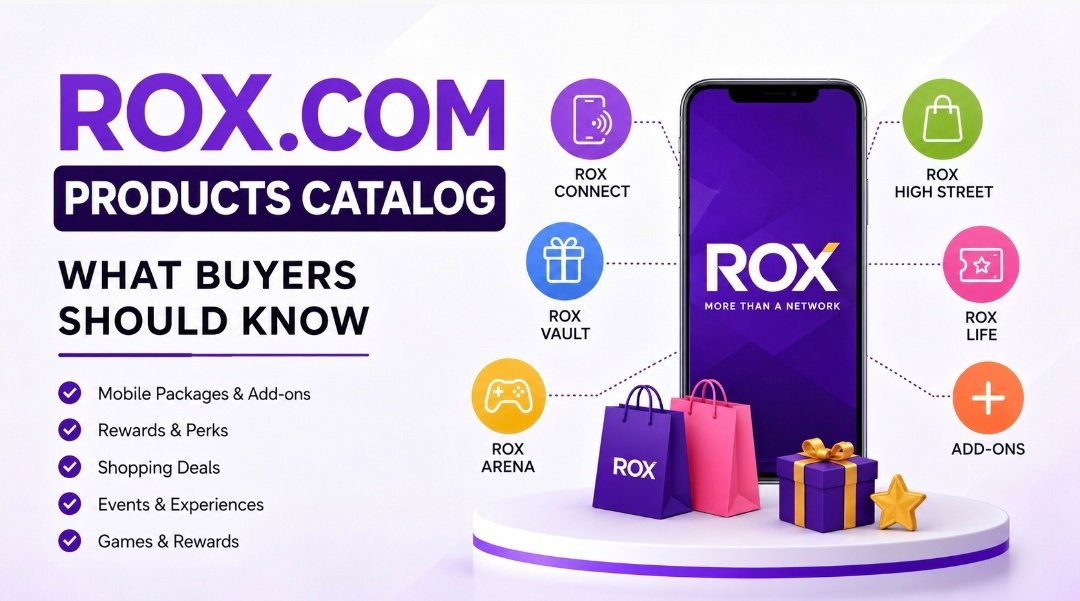
The search for the rox.com products catalog usually starts with a simple question: what exactly is ROX selling, and where do those offers live? The answer is more interesting than a basic store page, because ROX is built as a mix of mobile packages, rewards, perks, deals, and app-based experiences rather than a single product shelf. Its official pages currently point people to ROX Connect, Vault, add-ons, High Street, Life, and Arena, which means the catalog is wider than many buyers first expect.
That is exactly why the rox.com products catalog matters to anyone trying to compare options quickly. If you only look for “plans,” you may miss perks, sharing features, event access, or shopping offers that change the real value of the package. The official brand positioning also shows that ROX is meant for a digital-first audience that wants more than connectivity alone.
What the rox.com products catalog really is
The rox.com products catalog is not a traditional ecommerce catalog in the usual sense. Instead of only listing physical items, it combines telecom-style bundles with digital benefits, lifestyle access, and app-based extras. ROX describes itself as “more than a network,” and its live site organizes the offer around packages, vault-style perks, add-ons, and experiences.
That structure matters because it changes how a buyer should read the page. Someone searching the rox.com products catalog may be looking for a plan, a discount, a reward, or a shopping item, and all of those can live under the same brand umbrella. ROX’s official app pages reinforce that idea by showing ROX Connect, ROX Vault, ROX Life, ROX High Street, and ROX Arena as the main user paths.
READ MORE: Magfusehub com: What It Is and Why It Matters
The main catalog groups you will see
ROX Connect is the core part of the rox.com products catalog for many users. On the live site, it is presented as the place for packages, vault access, and add-ons, with plans such as Just Vibe, Basic Vibe, Crazy Vibe, Insane Vibe, and Share Vibe. Those names are not random branding; they point to different data, SMS, and minutes mixes so buyers can choose according to usage instead of guessing from a single generic bundle.
Beyond the base packages, the catalog also stretches into lifestyle features. ROX Vault is tied to perks, discounts, and giveaways, while ROX Life focuses on events, concerts, gaming tournaments, and exclusive merchandise. ROX High Street is where shopping and branded deals come into play, and ROX Arena is the games-and-rewards layer that gives the app a more interactive feel.
Why the rox.com products catalog feels like an app, not a storefront
A normal product catalog usually asks a buyer to browse, add to cart, and check out. The rox.com products catalog works differently because the app sits at the center of the experience, and the official description frames it as a place to manage mobile usage, access perks, and explore experiences in one flow. That is why ROX feels closer to a lifestyle dashboard than a simple shopping site.
That app-first model also changes how the catalog is updated and used. Instead of treating every offer as a one-time purchase, ROX ties many items to active usage, rewards, and renewal cycles, which means the buyer has to think about ongoing value. The rox.com products catalog is therefore less about one product and more about a connected system of plans, benefits, and app actions.
How to compare options inside the catalog
The smartest way to read the rox.com products catalog is to start with your real usage. If you need more data than calls, look at the GB amount first and ignore the flashy naming until the end. If you make more calls than you stream, then minutes and SMS should matter more than the highest data number on the page. The best package is the one that matches your habits, not the one with the loudest name.
Another useful step is to compare whether the package is personal or shared. ROX has a Share Vibe option that is built for group use, and the catalog also mentions adding contacts from the app after subscription. That makes the rox.com products catalog more flexible than a plain one-user bundle, but it also means you need to read the sharing rules carefully before choosing.
What ROX package names are trying to tell you
The package names in the rox.com products catalog are built around lifestyle language, not technical jargon. Just Vibe, Basic Vibe, Crazy Vibe, Insane Vibe, and Share Vibe are designed to feel easy to remember, but they also hint at different levels of usage and ambition. That kind of naming works well for younger audiences because it makes the catalog feel less stiff and more personal.
Names like these can help, but they can also hide the real decision points if a buyer is not paying attention. A friendly title does not tell you whether the package is right for streaming, gaming, calling, or group sharing, so the rox.com products catalog still needs a careful read. The better habit is to use the name as a label and the included benefits as the actual decision tool.
Where shopping fits into the rox.com products catalog
The shopping side of the rox.com products catalog is what makes it different from a standard telecom page. ROX High Street is described in the app store listing as a place for handpicked deals from fashion and handset brands, which means the catalog is not limited to connectivity alone. In recent ROX updates, the brand has also highlighted authentic Apple products available through the app, showing that the catalog can stretch into premium device shopping as well.
That broad mix can be useful, but it also needs a careful approach. If you land on the rox.com products catalog expecting a clean electronics store, you may be surprised to see plan bundles, rewards, event perks, and shopping offers side by side. The real strength of the platform is that it tries to connect those pieces into one user journey instead of forcing people to jump between separate services.
What buyers should check before choosing anything
Before you subscribe or order through the rox.com products catalog, check the renewal behavior first. ROX’s own FAQ includes topics like auto-resubscription, package sharing, add-ons, roaming, and support, which tells you that the details matter as much as the headline offer. If you skip those details, a package can look cheap on paper and still feel inconvenient later.
Support access matters too, especially if the catalog item is tied to usage or active app management. The live package page lists contact options, and the app store review section shows that some users have raised concerns about usability and repeating subscription steps. Those reviews are personal opinions, not final verdicts, but they do show why checking the small print in the rox.com products catalog is a smart move.
Where people often misunderstand the catalog
One common mistake is treating the rox.com products catalog like a normal online shop and expecting every item to behave the same way. A plan, a perk, a reward, and a shopping offer do not work like identical products, even when they sit under the same brand. ROX is built as a connected ecosystem, so the buyer needs to understand which part of the catalog they are using before making a choice.
Another misunderstanding comes from assuming the catalog is only for telecom users. The brand messaging on the official site and in the Jazz launch coverage shows a much broader goal: packages, exclusive deals, concerts, gaming, sports, and rewards for a digital-first audience. That is why the rox.com products catalog can feel bigger than a phone plan page and more like a lifestyle hub.
How to get better value from the catalog
The best way to use the rox.com products catalog is to match it to your own pattern of use. Heavy streamers should care about data first, frequent callers should study minutes first, and group users should check whether share features make the price easier to justify. When a catalog mixes benefits this broadly, value comes from fit rather than from a single big number on the screen.
A second value tip is to think beyond the package itself. ROX Vault, ROX Life, ROX High Street, and ROX Arena can add value only if you actually use them, so it helps to ask whether the extra layer will matter in your day-to-day routine. The rox.com products catalog is strongest for people who like all-in-one digital experiences, not for buyers who want a single, narrow utility.
Who the rox.com products catalog suits best
The official launch messaging made it clear that ROX was built for Pakistan’s digital-first generation. That means the rox.com products catalog is likely to appeal most to younger users, mobile-heavy users, and people who like apps that mix utility with lifestyle perks. It also fits buyers who enjoy rewards, deals, and event access alongside basic connectivity.
For someone who only wants a plain, old-style telecom bundle, the catalog may feel busier than necessary. For someone who likes to manage plans, perks, shopping, and experiences in one place, it can feel much more useful than a standard package list. That is the real reason the rox.com products catalog stands out: it is built for a wider daily routine, not just a single transaction.
Search tips for finding the right ROX page
If you are trying to navigate the rox.com products catalog, start with the official ROX site and the FAQ page instead of random reposts. The site already separates packages, package sharing, add-ons, ROX Vault, ROX Highstreet, events, sports, rewards, roaming, and auto-resubscription into clear areas, which makes it easier to find the right path fast. That structure is a better guide than scattered screenshots or old social posts.
It also helps to search by the feature you want rather than by the brand name alone. Queries like ROX Connect, ROX Vault, ROX High Street, package sharing, and auto-resubscription usually lead you to the right section faster than a broad search for the rox.com products catalog. Once you know the category, the rest of the decision becomes much easier.
Conclusion
The rox.com products catalog is best understood as a connected system, not a simple list of things for sale. It brings together mobile packages, shared plans, perks, shopping, rewards, and experiences under one brand, which is why it feels larger than a normal catalog page. Once you know that structure, comparing ROX becomes much easier and much less confusing.
For buyers, the main rule is simple: read the benefits, check the renewal details, and choose the part of the rox.com products catalog that fits your real use. The people who get the most out of it are the ones who care about both utility and extras, not just one of them. That is where the catalog has the most value, and that is where it makes the most sense to spend time comparing carefully.

People searching for magzyminutes.com usually want a clear picture of the site, not a vague summary stuffed with buzzwords. Based on its homepage, MagzyMinutes presents itself as an independent digital media platform built for readers who want clear, practical understanding across business, technology, finance, legal topics, education, lifestyle, and home improvement. The site’s own wording shows a strong focus on making information easier to read and more useful in daily life. That matters because a lot of modern content feels crowded, rushed, and hard to trust. magzyminutes.com stands out only if it truly delivers clarity, relevance, and reader value in a way that feels natural.
What magzyminutes.com Is Built to Do
magzyminutes.com is designed around a simple idea: help readers understand useful topics without making them work too hard. Its homepage says the platform focuses on clarity, context, and practical understanding, and that message appears throughout the site’s main sections. The brand is not presented as a narrow niche blog, but as a broader digital media space that brings together subjects people deal with in everyday life. That makes the site feel more like a modern online magazine than a single-topic publication.
The name itself also gives away the goal. The “minutes” part suggests quick reading, while the overall structure points toward short, readable content that respects the reader’s time. That is a smart choice in a digital space where people often skim, search fast, and leave quickly if the page feels heavy. magzyminutes.com seems built for readers who want useful information in a format that is easy to move through. The site says its content is meant to be understood in minutes rather than hours, which matches that reading style well.
READ MORE: Magfusehub com: What It Is and Why It Matters
The Main Topics Covered on magzyminutes.com
One of the clearest things about magzyminutes.com is its wide topic mix. The homepage lists business insights, technology trends, finance awareness, legal information, education guides, lifestyle content, and home improvement ideas as part of the site’s coverage. That range gives the platform a broad editorial identity instead of a single audience lane. Readers can come for one topic and still find something else useful without leaving the site.
That broad structure matters because real readers rarely live inside just one subject. Someone interested in technology may also want finance advice, while a student may also care about productivity, career learning, or digital tools. magzyminutes.com is positioned to serve that kind of mixed reading habit. The site’s homepage suggests that it aims to connect everyday concerns rather than separate them into isolated buckets. That approach makes the platform feel practical and flexible.
Why the Site Feels Reader-Friendly
A big part of the appeal of magzyminutes.com is its promise of simplicity. The site says it avoids unnecessary complexity and tries to keep explanations clear, structured, and human-centered. That matters because many readers do not want a wall of technical language before they understand the main point. They want content that gets to the answer, explains the context, and moves on without wasting time.
The structure of the homepage supports that idea. Each section uses plain language and short explanations, which makes the site easier to scan on desktop and mobile. That kind of format is especially helpful for readers who browse during short breaks or while multitasking. It also makes the content more suitable for people who prefer direct reading over long-form analysis. A clean structure usually helps a site feel more trustworthy and less tiring.
Who magzyminutes.com Is Best For
magzyminutes.com appears to be aimed at everyday readers who want general knowledge that still feels useful. The site’s own description makes it clear that it is built for people who want to make better decisions in life, work, and learning. That opens the door for students, professionals, small business owners, freelancers, and casual readers who want something more practical than entertainment-only content. The broad topic range supports that audience mix well.
Students may like the education and learning sections because the site says it covers study tips, online education trends, skill development, career learning paths, and productivity techniques. Professionals may be drawn to the business and finance sections because those areas often help with daily decision-making. Lifestyle readers may find value in the personal development and modern living content, especially when they want ideas that are simple instead of overly polished. The platform seems to serve readers who like variety but still want a steady tone.
Business and Finance Content on magzyminutes.com
Business content on magzyminutes.com is described as simple and practical, not overly technical. The homepage says the site breaks business topics into readable insights and focuses on market changes, startup culture, digital business models, entrepreneurial strategies, and industry trends. That is useful for readers who want to understand what is happening without being buried in jargon. It also suggests that the site is trying to translate business language into everyday meaning.
Finance content follows the same pattern. The site says it covers personal finance basics, budgeting and saving, digital banking trends, investment awareness, and economic changes. Rather than presenting itself as a source of formal financial advice, magzyminutes.com says its goal is financial awareness. That difference matters because awareness content can help readers become more informed, while still leaving big money decisions to qualified professionals.
Technology Topics That Fit the Site
Technology is one of the strongest parts of the magzyminutes.com identity. The homepage says the site covers artificial intelligence and automation, digital tools and software, cybersecurity awareness, tech industry updates, and internet culture. That gives the platform a modern tech angle without turning it into a deeply technical publication. The focus is less on expert-level engineering detail and more on how technology affects work, learning, and daily life.
That approach is useful because most readers do not need a full technical breakdown for every new trend. They need to know what a tool does, why it matters, and whether it changes anything in real life. magzyminutes.com appears to organize its tech coverage around impact, which is a smart way to make information easier to understand. A reader can quickly decide whether an update is useful, risky, or simply interesting. That kind of framing is often more valuable than a long technical lecture.
Legal and Education Sections Add Extra Value
Legal topics are usually hard for general readers because the language is often dense and formal. magzyminutes.com says it tries to simplify legal information by covering consumer rights, digital laws and online safety, workplace regulations, and general legal processes. That makes the site more accessible for people who want basic awareness without opening a law textbook. The key value here is clarity, not legal complexity.
Education content gives the platform another useful layer. The homepage says the site includes study tips, online education trends, skill development guidance, career learning paths, and productivity techniques. That mix works well for people who are actively trying to improve their skills or move into a new stage of learning. It also fits the site’s larger theme of making knowledge easier to use in everyday life. A site that supports both learning and practical action often keeps readers coming back.
Lifestyle and Home Improvement Make the Site Feel Broader
Lifestyle content on magzyminutes.com is framed around real life rather than polished fantasy. The homepage mentions daily productivity habits, work-life balance, mental clarity, digital lifestyle trends, and personal development ideas. That kind of coverage matters because many readers want simple ways to make daily routines feel lighter and more organized. The site is not trying to sound dreamy or overly inspirational; it is trying to be helpful in a grounded way.
Home improvement adds another practical angle. magzyminutes.com says it covers home organization, affordable improvement tips, interior inspiration, smart living ideas, and maintenance basics. That gives the site a useful everyday dimension because home content often appeals to people who want quick wins, not expensive overhauls. The focus on simple improvements fits the platform’s broader style very well. Readers looking for easy, realistic suggestions are likely to find that section more approachable than highly polished design content.
How to Judge the Content on magzyminutes.com
Readers should look at magzyminutes.com the same way they would judge any general content platform: by the quality of the explanation, not just by the headline. A useful article should answer the main question quickly, stay on topic, and give enough detail to make the information worth reading. The site’s own homepage says it values practical relevance, simple structure, and useful insights, so those are the standards the content should meet. If a page feels vague or padded, it is probably weaker than the brand promise suggests.
Trust also depends on how well the article matches the reader’s need. A strong business piece should explain the real-world effect of a trend, while a tech piece should connect the tool to daily use. A finance post should inform without pretending to replace professional advice, and a legal explainer should stay clear about what it can and cannot do. magzyminutes.com says it aims for readability and practical understanding, so the most useful posts will be the ones that stay close to that promise.
Why This Kind of Site Works Well in Search
Sites like magzyminutes.com often perform well when they stay broad but organized. Search engines and AI answer systems tend to understand pages better when the topics are clearly grouped and the writing explains how each subject fits the bigger picture. The homepage already shows a wide content map with business, technology, finance, legal, education, lifestyle, and home improvement sections. That gives the brand enough topic depth to build a strong identity if the articles stay consistent and genuinely useful.
The same structure also helps readers who do not arrive with a fixed plan. Someone may search for one topic and then discover another useful article on the same site. That kind of experience works especially well for magazine-style platforms because the reader can move naturally from one interest to another. magzyminutes.com seems built for that kind of browsing behavior, where simple reading leads to more reading. A site that makes discovery feel easy usually has a better chance of keeping attention.
What a Smart Reader Should Expect Next
A smart way to use magzyminutes.com is to treat it as a general knowledge hub rather than a specialist database. The homepage suggests a platform that wants to simplify information across several important topics, and that is a strong position for casual readers and practical learners. The best experience will come from articles that stay clear, specific, and grounded in real use. Readers who like short, readable explanations will probably find the format appealing.
Another good expectation is variety. Since the site covers several categories, readers can return for different needs instead of depending on one niche alone. That flexibility is part of the brand’s identity and one of the reasons magzyminutes.com feels more like a digital magazine than a single-purpose blog. If the editorial quality stays steady, that variety can become a real strength. The platform’s own language suggests that it wants to grow as a trusted source of easy-to-understand information.
Conclusion
magzyminutes.com is presented as an independent digital media platform built around clarity, practical value, and broad everyday usefulness. Its homepage shows a wide range of topics, including business, technology, finance, legal awareness, education, lifestyle, and home improvement, all written in a way that aims to be simple and reader-friendly. That makes the site appealing to people who want quick understanding without losing the bigger picture. For readers who prefer clear explanations over heavy language, magzyminutes.com has a straightforward and practical identity.

Making informed financial decisions has become increasingly challenging in a world shaped by economic uncertainty, technological innovation, and rapidly changing markets. Whether someone is building a personal budget, launching a startup, or exploring investment opportunities, reliable information plays a vital role in long-term success. fundfireinsight.com is an online publication that focuses on simplifying finance, business, entrepreneurship, investing, and economic topics through educational content that is accessible to readers with different levels of experience. By presenting practical explanations instead of overwhelming technical language, the platform encourages readers to strengthen their financial knowledge and make more confident decisions.
Understanding the Purpose of fundfireinsight.com
At its core, fundfireinsight.com is designed to make financial knowledge easier to understand. The platform publishes articles covering personal finance, investing, entrepreneurship, business development, financial technology, and broader economic trends. Rather than concentrating on a single niche, it brings together multiple financial disciplines that often influence one another. This approach helps readers understand how business, investments, markets, and the economy are connected while offering practical insights that can support everyday financial decision-making.
READ MORE: tui flight by6754 emergency landing: Inside the Emergency That Ended Safely
Broad Coverage Across Finance and Business
One of the platform’s strengths is its wide range of educational topics. Readers can find discussions related to budgeting, saving, wealth management, investment strategies, startup guidance, market developments, leadership, and business growth. The content is written for people who want to expand their financial understanding without needing advanced professional knowledge. By combining personal finance with entrepreneurship and market analysis, fundfireinsight.com creates a resource that serves students, professionals, investors, entrepreneurs, and small business owners alike.
Making Complex Financial Topics Easier to Understand
Financial terminology often discourages beginners from learning about money management or investing. The editorial approach of fundfireinsight.com focuses on explaining concepts in straightforward language while maintaining professional accuracy. Instead of presenting complicated theories alone, articles aim to provide context, practical examples, and useful explanations that readers can relate to their own financial situations. This educational style makes complicated subjects feel less intimidating and encourages continuous learning rather than short-term speculation.
Supporting Better Financial and Investment Decisions
Financial education is valuable because nearly every major life decision involves money. Whether someone is preparing for retirement, reducing debt, building an emergency fund, or creating an investment portfolio, informed decisions generally lead to stronger long-term outcomes. fundfireinsight.com emphasizes responsible financial planning by encouraging readers to understand risk, diversify investments where appropriate, and focus on sustainable financial habits instead of unrealistic expectations. This balanced perspective supports thoughtful decision-making across different financial goals.
Business, Entrepreneurship, and Innovation
Modern businesses operate in an environment shaped by digital transformation, changing customer expectations, and global competition. Entrepreneurs need knowledge that extends beyond product development to include financial planning, marketing, leadership, and operational efficiency. The platform explores these areas by discussing practical business strategies, startup development, innovation, and emerging technologies. Readers interested in entrepreneurship can gain a broader understanding of the challenges and opportunities involved in building sustainable businesses in today’s competitive marketplace.
The Importance of Economic Awareness
Economic developments influence households, businesses, and investors every day. Changes in inflation, interest rates, employment conditions, consumer spending, and financial markets affect personal budgets as well as long-term investment decisions. fundfireinsight.com explains these broader economic trends in language that is easier to understand, helping readers connect financial news with real-world consequences. Developing this awareness enables individuals to evaluate changing market conditions with greater confidence and perspective.
Digital Publishing and Educational Value
The growing popularity of online learning has increased demand for trustworthy digital publications that present reliable financial information in an accessible format. fundfireinsight.com contributes to this trend by publishing educational articles that encourage readers to continue improving their financial literacy. While publicly available information about the platform’s ownership, audience size, partnerships, or financial performance remains limited, its focus on educational content reflects the increasing importance of digital resources that simplify finance and business concepts for everyday readers.
Conclusion
Financial literacy has become one of the most valuable skills for individuals, investors, entrepreneurs, and business leaders. As economic conditions continue changing, access to understandable and practical information becomes increasingly important. fundfireinsight.com serves as an educational platform that brings together finance, business, investing, entrepreneurship, and economic insights in a reader-friendly format. Although some corporate details about the website are not publicly available, its emphasis on clear explanations and practical learning makes it a useful destination for readers seeking to strengthen their financial knowledge and make better-informed decisions over time.
FAQs
What is fundfireinsight.com?
fundfireinsight.com is an online publication that shares educational content related to finance, business, investing, entrepreneurship, financial technology, and economic developments, helping readers better understand complex financial topics.
Who can benefit from reading fundfireinsight.com?
The platform is suitable for students, professionals, entrepreneurs, investors, and small business owners who want practical financial knowledge presented in clear language without unnecessary complexity.
Does fundfireinsight.com provide financial advice?
The website primarily offers educational and informational articles intended to improve financial understanding. Readers should conduct their own research or consult qualified professionals before making important financial decisions.
What subjects are commonly covered on the platform?
Its articles typically explore personal finance, investing, business development, entrepreneurship, financial planning, market analysis, financial technology, and economic trends that influence individuals and businesses.
Why is financial education important today?
Financial education helps people understand budgeting, investing, borrowing, saving, retirement planning, and economic changes. Strong financial knowledge supports better long-term decisions and improves confidence when managing personal or business finances.
-
Blogs13 hours ago
magzyminutes.com: What It Covers and Why It Matters
-
 FINANCE technology13 hours ago
Fintechzoom.com Nasdaq: Your Gateway to Smarter Market Insights
-
Blogs13 hours ago
Rox.com products catalog: what buyers should know
-
Blogs13 hours ago
fundfireinsight.com: Smart Finance and Business Insights
-

 Blogs6 days ago
How DXB APPS Is Supporting Digital Transformation Through Mobile App Development in Dubai?