Blogs
Tubehalote: What It Is and How It Works
Tubehalote has started showing up as a name people search when they want a simple place to read useful articles across different topics. Based on the site and the way it is currently described online, tubehalote looks like a multi-topic blogging platform that publishes easy-to-read content for general readers, not just experts. That matters because people do not always want a long technical explanation when they are looking for quick help, a clear overview, or a practical idea they can use right away. Tubehalote fits that kind of search behavior by keeping things broad, readable, and category-based. If you have seen the name and wondered what it actually offers, the real answer is less about a single product and more about a content hub built for everyday information.
What Tubehalote appears to be
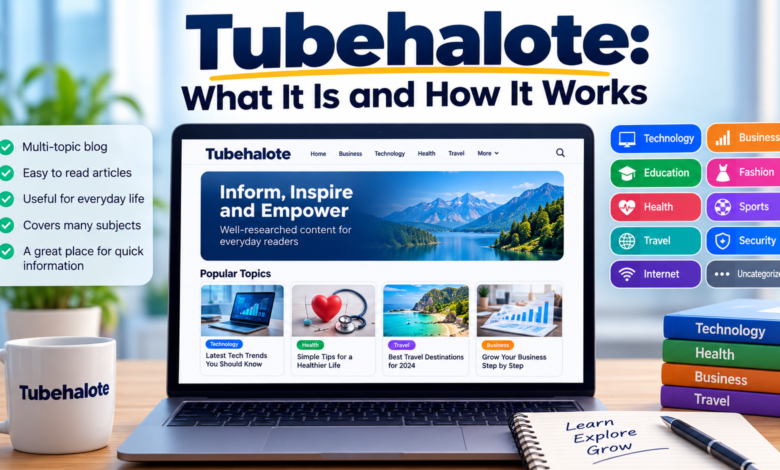
Tubehalote appears to be a content website built around general information, short guides, and category-based articles. The current homepage describes it as a growing blogging platform meant to inform, inspire, and empower readers with well-researched content, while other live descriptions present it as a multi-topic blog covering subjects like technology, business, health, fashion, sports, education, travel, and more. That makes tubehalote closer to a digital magazine than a narrow niche site. It is built for readers who want a quick way to move between different topics without opening several separate websites.
READ MORE: Expert Reviews TheLaptopAdviser: What to Know
That broad structure is important because it shapes the way tubehalote should be understood. Instead of expecting one deep specialist focus, readers should expect a mixed library of articles written for general use. The site’s own wording suggests that simplicity and accessibility are part of the plan, which is exactly what many casual readers want when they land on a blog from search. In practical terms, tubehalote is best read as a multi-purpose information site, not a brand tied to one narrow subject.
Why tubehalote gets search attention
A name like tubehalote draws attention because it sounds unfamiliar, and unfamiliar names naturally make people curious. Search users usually want to know whether a site is useful, safe, active, or simply new. In tubehalote’s case, the interest seems to come from its broad topic mix and its promise of simple, readable content that covers everyday subjects. That is enough to make people click, especially when they want a quick answer instead of a long research session.
Another reason tubehalote can attract search interest is the way modern readers browse the web. Many people prefer sites that bundle different kinds of advice in one place, especially when the writing is short and easy to scan. Tubehalote seems designed for that behavior by organizing posts into clear categories and presenting content in a familiar blog format. For users who want fast information, that kind of setup feels convenient and low effort.
The topics tubehalote covers
The visible category structure on the site shows that tubehalote is not locked into one subject. The homepage includes categories such as Business, Crypto, Education, Fashion, Health, Internet, Security, Sports, Technology, Travel, and Uncategorized, which signals a very wide editorial range. Other descriptions of the platform mention similar areas like finance and lifestyle as part of its broader content mix. That variety suggests that tubehalote is built to catch readers from many different search intents rather than one single niche.
This wide coverage can be helpful, but it also changes what readers should expect from the content. A multi-topic blog can be useful for quick learning, light research, and broad overviews, yet it may not always go as deep as a specialist publication on one subject. That means tubehalote is most valuable when you need an overview, a starting point, or a simple explanation. For highly technical, medical, legal, or financial decisions, readers should always go beyond the first article they find.
How tubehalote is structured for readers
Tubehalote follows a familiar blog layout, which makes it easy to browse even for first-time visitors. The homepage shows a standard article feed, visible categories, and navigation that lets readers jump between topics without extra steps. That kind of layout matters because people usually judge a website very quickly. If the structure feels clean and the content is easy to scan, visitors are more likely to stay and read.
The writing style also appears intentionally simple. The published descriptions of tubehalote repeatedly emphasize clarity, accessibility, and beginner-friendly reading, which is a strong signal that the site is trying to lower the effort needed to understand a topic. That style works best for readers who do not want heavy jargon or long academic explanations. In that sense, tubehalote seems built around the idea that useful content should be easy to reach and easy to understand.
What makes a multi-topic blog like tubehalote useful
A site like tubehalote can be useful because it saves time. Instead of searching across many separate websites, readers can explore different topics in one place and move from one category to another as their needs change. That matters for people who bounce between interests, such as health one day, technology the next, and travel later in the week. A broad blog gives them that flexibility without making them feel trapped inside one subject.
Another strength is discoverability. Multi-topic sites often catch many kinds of search traffic because each category can target different reader questions. When a platform like tubehalote publishes clear articles on everyday subjects, it creates more entry points from search engines and AI search tools. That is why broad content libraries often grow faster than narrow pages at the beginning, especially when the articles are simple, useful, and easy to index.
How to read tubehalote the smart way
Smart reading starts with checking the article’s purpose before trusting the information too deeply. Tubehalote is positioned as a general information site, so the best way to use it is to treat each article as a helpful starting point rather than the final word. That mindset is especially important when the topic affects money, health, safety, or other important decisions. A good reader uses the article to understand the basics, then confirms the details elsewhere if the subject is serious.
It also helps to pay attention to whether the article gives clear examples, practical steps, and enough context to be useful. Articles that stay specific are usually more helpful than ones that just repeat broad claims. Since tubehalote is built around simple reading, the strongest pages are likely the ones that answer a real question in a direct way. When a blog feels clear, relevant, and easy to navigate, readers usually get more value out of it.
Tubehalote and content quality signals
Good content on a site like tubehalote should feel grounded, readable, and focused on the reader’s real problem. The homepage language points to a promise of well-researched content, but readers still need to judge quality by what they actually see on the page. A strong article explains the topic in plain language, avoids empty filler, and gives enough detail to answer the search intent. Those signals matter far more than a fancy layout or a big category list.
A useful way to judge tubehalote is to check whether the article matches the category it sits in. A technology post should give clear tech context, a health article should stay careful and practical, and a travel post should help the reader plan or decide. When the content stays aligned with the category, the site feels more trustworthy and easier to use. When it drifts into vague wording, the value drops quickly.
Why tubehalote matters for modern SEO
Tubehalote is a good example of how content sites are now built for both humans and search systems. Search engines and AI tools reward clear structure, simple language, and content that answers a topic from multiple angles. A multi-topic platform can do well when it organizes articles by theme, keeps headlines readable, and covers the same subject with enough depth to be helpful. Those are the basics that support modern SEO performance.
The broader SEO lesson is that a site does not need to be huge to be useful. It needs to be clear, consistent, and easy to understand. Tubehalote’s style shows how a blog can serve readers across several subjects while still keeping the experience simple. That is a useful model for publishers who want traffic from search without turning every page into a wall of keywords.
Tubehalote for readers, not just search engines
Readers usually care about one thing first: does the page help me right now? Tubehalote seems built around that basic expectation by offering short, accessible articles on everyday subjects. That approach works well for people who want a clean answer without digging through long pages or complicated terms. The best part is that the site can serve both casual browsers and people who arrived with a specific question in mind.
Still, the value of tubehalote depends on the quality of the individual article. A broad site only feels strong when each post earns its place through clarity and usefulness. That is why readers should focus less on the name itself and more on whether the article gives real help. When the content is practical and well organized, tubehalote becomes more than a random blog name; it becomes a usable reading stop.
Conclusion
Tubehalote looks like a broad, reader-friendly blogging platform built to share simple information across many categories, from technology and business to health, travel, and lifestyle. Its appeal comes from easy access, clean navigation, and the promise of practical content that does not waste the reader’s time. That makes tubehalote useful for quick learning and general browsing, especially when someone wants a fast overview before going deeper elsewhere. Based on the site’s current structure and descriptions, tubehalote fits the modern multi-topic blog model very well.
For readers, the smartest way to use tubehalote is to treat it as a helpful first stop. Read the article, understand the main idea, and then verify anything important if the topic involves a big decision. For publishers, the lesson is even clearer: simple structure, useful information, and reader-first writing still matter more than anything else. Tubehalote works best when those things stay at the center.
Blogs
Hreflang, ccTLDs & Subfolders: A Barcelona Guide to Multi-Country SEO
International SEO is a structural discipline, not a translation task. A business expanding from Barcelona into France, Germany or Italy needs a domain structure, correct hreflang implementation and market-specific keyword research before a single sentence gets translated. Skipping structure and going straight to translation is the single most common reason multi-country websites fail to rank outside their home market.
This guide covers the three domain structures available for international expansion, how hreflang tags actually work, the mistakes that break them most often, and why translating keywords word-for-word undermines rankings even when the grammar is perfect.
Translation Is Not International SEO
A translated page and a localised page are different products. Translation converts words from one language to another. Localisation adjusts the underlying search strategy for a different market: different search volumes, different phrasing, different competitors and different intent signals.
Search engines evaluate a page against what people in that specific market actually type into the search bar. French users searching for a service rarely use the literal French translation of the English keyword a business ranks for at home. They use their own phrasing, shaped by local habits, regional vocabulary and country-specific search behaviour. A page built by translating English copy word-for-word targets the wrong queries from the outset, regardless of how fluent the translation reads.
International SEO treats each target country as a separate research project. That means separate keyword research, separate competitor analysis and separate content decisions for every market a business enters, not one master page copied across languages.
Choosing a Domain Structure
Three structures exist for organising international content: the country-code top-level domain (ccTLD), the subdomain, and the subfolder. Each sends different signals to search engines and carries different costs.
A ccTLD uses a country-specific extension, such as site.fr for France or site.de for Germany. Search engines treat a ccTLD as the strongest possible geographic signal: Google associates site.fr with France automatically, independent of any other setting. The trade-off is cost and complexity. Each ccTLD is a separate domain that needs its own hosting consideration, its own backlink profile built from scratch, and its own maintenance. A business entering ten countries under this model runs ten effectively separate websites.
A subdomain structure places country content on a prefix of the main domain, such as fr.site.com. Search engines generally treat subdomains as semi-independent from the root domain, which means authority built on the main site does not transfer fully to each subdomain. Subdomains are easier to set up than ccTLDs and easier to assign to regional teams or separate hosting, but they inherit the weaker authority-sharing problem without gaining the strong geographic signal a ccTLD provides.
A subfolder structure nests country content inside the main domain, such as site.com/fr/. This is the structure most businesses expanding internationally should default to. A subfolder inherits the authority, backlink profile and domain trust of the root domain immediately, because search engines treat it as part of the same site. Setup is simple: one hosting environment, one technical infrastructure, one set of core web vitals to maintain. The only drawback is a marginally weaker geographic signal compared with a ccTLD, a gap that hreflang tags and a country-targeting setting in Google Search Console close almost entirely.
For a Barcelona business expanding into two, three or five European markets at once, the subfolder structure wins on cost, speed and shared authority. The ccTLD model only earns its cost when a business needs full legal, hosting or brand separation by country, which is rare for a service business scaling across the EU.
How Hreflang Works
Hreflang is an HTML attribute that tells search engines which language and country a specific page targets, and which equivalent page to show users in other languages or regions. It solves a structural duplicate-content problem: multiple pages covering the same topic in different languages would otherwise compete against each other in search results.
A hreflang tag follows this pattern: a link element with rel set to alternate, hreflang set to a code such as fr-fr, and an href pointing to the matching page. The language code comes first (fr for French), followed by the country code (fr for France), separated by a hyphen. Every page in a set must declare its own hreflang tag and list every other language version of that same page, including a self-referencing tag pointing to itself.
The tags must form a complete return loop. If the English page links to the French page via hreflang, the French page must link back to the English page via hreflang, and every other page in the set must link to every other page. A one-directional hreflang tag is invalid and search engines disregard it.
Common Hreflang Mistakes
Four errors account for most hreflang failures on multi-country sites.
- Missing return tags. Page A references Page B, but Page B does not reference Page A back. Search engines require the full loop; a broken link in either direction invalidates the relationship between those two pages.
- Wrong language or region codes. Using “en-gb” for a page meant to target English speakers in Ireland, or “es” alone when the intent is specifically Spain rather than all Spanish-speaking markets, sends the tag to the wrong audience. Language codes follow ISO 639-1; country codes follow ISO 3166-1 Alpha 2.
- Conflicting canonical tags. A page’s canonical tag must point to itself when hreflang is in use. A canonical tag that points to a different language version tells search engines to treat that page as a duplicate rather than a distinct market version, which cancels the hreflang signal entirely.
- Inconsistent implementation across the set. Hreflang tags placed on some pages in a cluster but not others create a broken chain. Every page in the set needs the complete list of alternates, not just the pages that were updated most recently.
Testing hreflang after every deployment catches these errors before they affect rankings. A tag audit across the full site, not a sample of pages, is the only reliable way to confirm the return loop holds everywhere.
Localise Keywords, Not Just Words
Keyword localisation starts with independent research in the target market rather than a translated list from the home market. A term with strong search volume in Spain can have negligible volume in France under its literal translation, while a completely different phrase carries the actual demand.
Search intent also shifts by country. A service that ranks under an informational query in one market can rank under a commercial, ready-to-buy query in another, which changes what the page needs to say and how it needs to be structured. Local competitors, local terminology and local regulatory language all factor into which keywords carry real opportunity in each country.
A Barcelona business planning a multi-country expansion benefits from treating structure as the first decision, not the last. Domain architecture, hreflang implementation and market-specific keyword research need to be settled before content production starts, because retrofitting structure onto an already-live multi-language site is slower and more error-prone than building it correctly from the outset. SEO for expanding into new countries covers this structural planning stage directly, from domain choice through to hreflang audits.
FAQ
Is a subfolder always better than a ccTLD for international SEO? A subfolder is the stronger default for most businesses because it inherits the root domain’s authority immediately, though a ccTLD earns its cost when full legal or brand separation by country is required.
Does hreflang guarantee a page will rank in the target country? No, hreflang only tells search engines which page version to show for which audience; it does not influence rankings on its own, and the underlying content and keyword targeting still determine ranking performance.
Can one hreflang tag cover multiple countries that share a language? Yes, a language-only code such as “es” targets all Spanish-speaking regions collectively, while a language-country pair such as “es-mx” targets Mexico specifically, and businesses should choose based on whether content actually differs by country.
What happens if a canonical tag conflicts with a hreflang tag? The canonical tag overrides the hreflang relationship and search engines treat the page as a duplicate of the canonical target, which is why each language version needs a self-referencing canonical tag.
How many countries should a business target before setting up hreflang? Hreflang is worth implementing from the first additional country a business targets, since the duplicate-content risk between language versions exists as soon as a second market page goes live.
Should keyword research be repeated for every new country? Yes, search volume, phrasing and intent vary by country even within the same language, so keyword research needs to be done independently for each target market rather than reused across borders.
Bottom Line
Multi-country SEO succeeds or fails on structure first. A Barcelona business expanding into new European markets needs the domain structure decided, the hreflang tags fully looped and validated, and the keyword research done independently for each country before translation begins. Armen Andonian frames this as a sequencing problem: get the architecture right, and the content built on top of it has a real chance to rank; skip the architecture, and even excellent translated content competes against itself across markets instead of winning new ones.
Blogs
Best SEO Experts in Nepal (2026): 10 Providers, Compared on What They Actually Publish
Search “best SEO expert in Nepal” and you will find a dozen lists, most of them written by one of the companies on the list. Rankings are frequently paid placements, “reviews” are unverifiable, and every entry is described as leading, top-rated and results-driven.
This list uses a different rule, stated openly so you can check it.
The methodology
Inclusion required publicly verifiable information. Every claim below comes from what the provider publishes on its own site or from third-party directories, and you can confirm each one in under a minute. Nothing here is based on private conversations, paid submissions, or my opinion of anyone’s work.
No ratings, no scores, no ranking order. I have not audited anyone’s client results and neither has anyone else writing these lists. Presenting a numbered ranking would imply an assessment nobody performed. Entries are grouped by what they appear best suited to, not by quality.
Pricing transparency is treated as a signal. Most Nepali providers will not publish rates, which forces a sales call before you can judge whether a conversation is worth having. Where a provider publishes pricing, I have said so: not because cheap is good, but because published pricing lets you self-select out before wasting anyone’s time.
What I could not verify is stated as unverified. Where a provider makes a claim I cannot check, it is labelled as their claim.
1. Suraj Giri:
Based: Bhaktapur. Model: independent consultant.
The most unusually transparent operator in the Nepali market, and it is worth explaining why that matters more than it sounds.
Rates are published openly: NPR 20,000/month for small local businesses, NPR 45,000 for businesses competing on more than location, and NPR 80,000 for ecommerce and multi-location sites. Engagements are month to month with no lock-in, and every account is created under the client’s ownership.
The site also does something almost no provider does. It names the situations where hiring them would be the wrong choice: if you need a full digital marketing department, if you need thirty pages of content monthly, or if you want a guaranteed ranking by a fixed date.
Client testimonials were removed from the site deliberately, with reviews moved to a Google Business Profile where they cannot be edited or deleted by the business. That is a slower way to accumulate proof and a considerably more honest one.
Verticals with dedicated practice pages: education consultancy and trekking agency SEO, plus ecommerce, hotels, healthcare and real estate.
If you are shortlisting a seo expert nepal businesses can evaluate before a sales call, this is the clearest starting point simply because there is more to evaluate.
Best for: small to mid-sized businesses that want senior attention and a scope they can read before committing. Not for: anyone needing paid ads, social and design under one roof.
2. Sailesh Giri:
Based: Pokhara. Model: independent specialist.
A computer science background applied directly to technical SEO, which shows in the published case work: a site earning 33,000 organic clicks in six months from only six referring domains through internal linking architecture rather than link building; a consulting engagement moving a client from 51 to over 1,000 clicks; and a diagnosis of a malicious Cloudflare Worker cloaking gambling spam to Googlebot while showing normal pages to visitors.
That last one is worth noting because it is not a marketing case study. It is an incident response, and the ability to find it is a different skill from writing content.
The stated specialisms are technical SEO, internal linking and topical authority, AEO and generative-engine optimisation for ChatGPT, Perplexity and Google AI Overviews, and programmatic SEO using automation tooling.
Pricing starts at $350/month, stated openly on the site along with a note that clients for whom that would be a financial stretch are not a good fit.
For a business specifically looking for an seo expert pokhara rather than a Kathmandu Valley provider, this is the most technically documented option publicly visible.
Best for: SaaS, technical sites, sites with crawl or indexation problems, and anyone prioritising AI-search visibility. Not for: businesses wanting a full-service marketing partner.
3. Rambabu Thapa:
Based: Kathmandu Valley. Model: consultant leading a delivery team, founder of Orka Socials.
Publishes a qualification rule most providers keep private: engagements are for teams investing from around NPR 150,000 per month on three to six month terms, with a decision-maker required on calls. That single line saves a small business a sales call and tells a larger one the floor is deliberate.
Stated focus is semantic SEO and topical authority, technical SEO and migrations covering Core Web Vitals, JavaScript rendering, crawl and indexation, log files and redirects, and local SEO with landing pages mapped to specific Kathmandu corridors including Thamel, New Baneshwor, Lazimpat and Baluwatar.
Worth understanding structurally: the site states he designs strategy and leads quality assurance while a senior team executes. That is an agency-shaped product with a named principal attached, not solo delivery, and it should be priced as one. Also runs SEO training.
The experience claim varies across his own properties, showing 15+ years on the site and 12+ on his about.me profile. Trivial in itself, and a reminder that inconsistent figures across your own surfaces are what this kind of work exists to fix.
Best for: businesses at agency budget who want a named principal accountable for strategy. Not for: small budgets, which the published floor rules out by design.
4. Pranish Shakya:
Based: Kathmandu. Model: independent consultant.
The distinguishing asset is the career behind the SEO claim rather than the claim itself. Published background lists more than ten years in the field, a Masters from Tribhuvan University, a period as Corporate Digital Marketing Manager at Chaudhary Group’s head office in Sanepa covering verticals including Wai Wai, real estate, electronics, education and hospitality, and before that Deputy Digital Marketing Manager at Bajaj Nepal’s two-wheeler division.
Named brands worked with include Bajaj Nepal, Yamaha Nepal, Nepal Life Insurance and Chaudhary Group.
Someone who has sat inside a large Nepali corporation has handled brand approval chains, stakeholders who outrank the marketing team, and campaigns that clear legal first. Independents who have only worked agency-side have not, and it shows in how they handle a slow client. That background is hard to source in this market.
The published service mix is broad, covering social media, Google Display Network, creator collaborations, SMS marketing and lead generation alongside SEO. Read that as a 360-degree marketer rather than a search specialist. Does not publish pricing.
Best for: established brands and in-house teams needing someone fluent in the corporate process. Not for: a purely technical crawl or indexation problem.
5. Naresh Thapa:
Based: Biratnagar, serving nationally. Model: independent freelancer.
Positioned specifically around generative engine optimisation: being cited by ChatGPT, Perplexity and Gemini alongside ranking on Google. City-specific service pages exist for Kathmandu, Pokhara and Biratnagar, and the stated model is direct access with no junior staff and no long-term contract, with a free audit as the entry point.
With roughly 40 to 43% of local queries now triggering an AI Overview, organising an offer around that shift is at least reading the same data as everyone else. Whether execution matches positioning is not something any list can verify.
Worth crediting: he publishes his own roundup of Nepali providers with a conflict-of-interest notice disclosing that he appears in it. That disclosure is rarer in this market than it should be.
Held to the same standard as every other entry, two observations. The experience claim varies across his own pages, appearing as 5+ years on most and over ten years in one FAQ. The stated base differs too, given as Kathmandu on one page and Biratnagar on others. Neither is disqualifying, and both are the kind of internal inconsistency that makes a site harder for an AI system to cite.
Best for: businesses prioritising AI-search visibility, comfortable with fully remote delivery. Not for: anyone who needs someone physically present.
6. RaiseRank: best for build and growth together
Based: Pokhara. Model: software engineering and growth studio.
Positions itself as engineers first: custom websites, web apps, app development and software, with SEO and AI-search optimisation on top. Serves clients in the UK and Australia alongside Nepali businesses.
The named client roster is publicly listed and independently checkable: Mustang Airworks (aviation parts), Bodhi Dham (yoga retreat), 6K Nepal Treks, Trek with Rohit, Debyani Tours, Atma Gyan Yoga, Trail Running Nepal and a bilingual restaurant site in Japan. Being able to click through to live sites is more useful than a screenshot of a traffic graph.
Publishes a free audit offer and states that client onboarding is capped monthly. Does not publish pricing.
The structural argument for this model is real: URL structure, rendering strategy and page speed are decided in week one of a build and expensive to reverse afterwards, so a team that owns both sides removes a failure mode that otherwise falls between the developer and the marketer.
Best for: businesses needing a new site and the traffic to make it worthwhile. Not for: anyone who only wants consultancy on an existing site.
7. Gurkha Technology: best for established brands wanting multi-channel
Based: New Baneshwor, Kathmandu. Model: full-service digital agency.
Digital marketing, web design and hosting. The publicly named client list is the notable asset here: Nepal Airlines Corporation, Nimbus Nepal, The Burger House & CFC, Presidential Business School and Famous Steel & Home Appliances, with attributed testimonials from named individuals at several of those organisations.
Named, attributable testimonials from identifiable people at recognisable Nepali institutions are meaningfully stronger evidence than anonymous quotes, and rare in this market.
Does not publish pricing. Service mix skews toward social media and paid advertising alongside SEO.
Best for: established brands wanting SEO inside a broader marketing relationship. Not for: businesses whose problem is specifically technical.
8. Digital Terai: best for 360-degree digital marketing
Based: Koteshwor, Kathmandu. Model: full-service agency.
Covers SEO, local SEO, PPC, social media, graphic design and web development. States that its team holds Google and HubSpot certifications, and that it follows white-hat methodology. Listed on third-party directories including DesignRush and Sortlist.
Does not publish pricing. Offers a free website SEO score tool as a lead capture.
Best for: businesses wanting one supplier across several channels. Note: the site’s published blog content has not been updated recently, which is a factual observation rather than a judgement on client delivery.
9. Ads Bee Media: best for Pokhara SMBs wanting range
Based: Pokhara. Model: full-service agency, operating since 2017.
Eight stated service lines: web development, graphic design, SEO, PPC, content writing, branding, social media marketing and UI/UX design. Builds primarily on WordPress.
Does not publish pricing. The breadth is the offer: a single supplier for a small business that needs several things and does not want to manage several relationships.
Best for: Pokhara-based small businesses wanting one supplier for everything. Not for: businesses with a specific technical constraint needing deep expertise.
10. The directory tier
Several additional Nepali providers appear consistently across independent directories (Clutch, Sortlist, DesignRush and TechBehemoths), including Bikash Thapa, JO Marketing, WebX Nepal, Yeti Studio, Abstract Infosys, KTM Rush, Genesis Web Technology, Web Creation Nepal and Growfore Solution.
I have not included individual entries for these because I could not verify enough about them to write anything useful, and padding a list with names lifted from a directory is exactly the practice this article exists to avoid. They are listed here so you can evaluate them yourself.
One clarification worth making: Leapfrog Technology, Kathmandu’s largest and best-known software firm (operating since 2010, around 450 staff, clients including Microsoft, LG and UCSF, with AWS Generative AI Competency), appears in searches for Nepali tech providers. It is a product engineering company, not an SEO firm. Excellent at what it does; not what this list is about.
How to actually choose
Whatever the list says, four questions decide it, and none needs technical knowledge:
What did you find when you looked at my site? A competent provider names something specific: four pages competing for one query, templated titles, a blog on a subdomain sharing no authority. A weak one describes their process. This distinction is audible to anyone and it is the single most reliable signal available.
When would you tell me not to do this? Anyone who cannot name a scenario has never declined work.
Do I own every account? Search Console, Analytics, Business Profile, domain, hosting: created under your ownership, access granted to them. Never the reverse. Hesitation here is disqualifying on its own.
Can I see a real report? Redacted is fine. You are checking whether it connects activity to outcome, and whether it shows clicks rather than only positions. Positions can rise while traffic falls: click-through rate at positions one to five fell roughly 17.92% year over year, per GrowthSRC’s study of 200,000+ keywords.
Blogs
quotela.net: The Complete Guide to Daily Quotes, Inspiration, and Personal Growth
Life is full of moments that challenge, inspire, and transform us. During these moments, a few meaningful words can often provide the motivation needed to move forward. Platforms like quotela.net have become valuable resources for people searching for inspirational quotes, life lessons, motivational sayings, and thoughtful reflections that encourage positive thinking. Whether you are looking for wisdom from famous personalities, uplifting messages for social media, or meaningful words to brighten your day, this type of platform serves as a convenient destination. Understanding how to make the most of quote collections can help improve daily motivation, communication, and personal development.
Understanding quotela.net and Its Purpose
The internet has transformed the way people consume inspirational content. Instead of relying solely on books or magazines, users now explore digital platforms that organize thousands of meaningful quotations into easily accessible categories. quotela.net represents this growing trend by providing readers with a structured collection of motivational, educational, and emotional content suitable for various situations. Whether someone needs encouragement after a difficult day or wants to share a thoughtful message with friends, online quote platforms simplify the search.
A well-organized quote website typically covers topics including success, love, friendship, leadership, education, family values, happiness, perseverance, self-confidence, and emotional healing. Visitors appreciate having categorized content because it saves time while offering relevant ideas for different moods and occasions. Rather than endlessly searching across multiple websites, users can discover curated collections in one place, making their browsing experience more enjoyable and productive.
READ MORE: Geekzilla Tio Geek: The Ultimate Guide for Modern Tech Lovers
Why quotela.net Appeals to Modern Readers
People increasingly seek quick yet meaningful content in today’s fast-paced digital environment. Short, impactful quotes fit perfectly into busy lifestyles because they communicate deep ideas within a few words. quotela.net attracts readers by offering inspirational content that is easy to read, understand, and share across various digital platforms. These concise messages often leave lasting impressions despite their simplicity.
Another reason for the popularity of quote websites is emotional connection. People naturally relate to words that reflect their personal experiences, struggles, ambitions, or dreams. A carefully chosen quotation can validate someone’s feelings, encourage resilience during difficult periods, or provide clarity when making important decisions. This emotional relevance encourages visitors to return regularly in search of fresh inspiration and practical wisdom.
Categories of Quotes You Can Explore
One of the strongest features of an organized quotation platform is its broad selection of themes. Readers have different interests and emotional needs, making diverse categories essential for maintaining engagement. From motivational sayings that inspire professional growth to romantic expressions that strengthen relationships, the variety ensures every visitor finds something meaningful.
Popular quote categories generally include motivational quotes, positive thinking, famous historical figures, success mindset, leadership lessons, friendship messages, family values, educational wisdom, business inspiration, gratitude, happiness, personal development, confidence building, resilience, mindfulness, and self-care. Seasonal collections for holidays, birthdays, anniversaries, and special occasions further expand the usefulness of such platforms. This diversity allows users to discover words that perfectly match both everyday conversations and significant life events.
How Inspirational Quotes Support Personal Development
Inspirational quotations may appear simple, yet they often carry profound psychological value. Reading encouraging words regularly can positively influence attitudes, strengthen resilience, and reinforce healthy thought patterns. Many successful individuals begin their mornings with motivational reading because it helps establish a productive mindset before tackling daily responsibilities.
Personal growth depends heavily on consistent learning and reflection. Quotes summarize complex life lessons into memorable statements that are easy to recall throughout the day. Instead of lengthy motivational speeches, a single sentence may remind someone to stay focused, embrace challenges, maintain patience, or continue pursuing long-term goals. This ability to reinforce positive thinking makes inspirational content a valuable tool for self-improvement and lifelong learning.
Using quotela.net for Social Media and Content Creation
Social media has significantly increased demand for high-quality quotations. Content creators, marketers, bloggers, educators, and business professionals frequently use inspirational messages to improve audience engagement. quotela.net can serve as a useful resource for discovering meaningful words that complement articles, presentations, videos, newsletters, and social media posts.
Well-chosen quotes often generate higher interaction because they resonate emotionally with readers. Platforms like Instagram, Facebook, LinkedIn, Pinterest, and X regularly feature motivational graphics accompanied by inspiring words. Businesses also incorporate thoughtful quotations into marketing campaigns to strengthen brand identity and connect with audiences on a deeper emotional level. When paired with attractive visuals, carefully selected quotes can increase shares, comments, and overall engagement while delivering genuine value to readers.
Tips for Finding the Most Meaningful Quotes
Not every inspirational quote will resonate equally with every reader. Personal experiences, goals, beliefs, and emotions influence how individuals interpret different messages. Therefore, selecting quotations thoughtfully is more valuable than simply collecting hundreds of random sayings. Readers should focus on quality rather than quantity when building a personal collection of favorite quotes.
A practical approach involves bookmarking meaningful quotes, organizing them into personal categories, and revisiting them during challenging situations. Keeping a journal of favorite quotations alongside personal reflections can strengthen their impact over time. Readers may also compare perspectives from different authors, philosophers, entrepreneurs, educators, and historical figures to gain broader insights into life’s many challenges and opportunities. This intentional approach transforms inspirational reading into an effective habit for continuous personal growth.
The Growing Importance of Digital Inspiration Platforms
The popularity of online inspiration platforms reflects broader changes in digital content consumption. Modern readers value accessible, concise, and emotionally relevant information that fits naturally into their daily routines. Mobile devices allow users to access motivational content anytime, whether commuting, studying, working, or relaxing at home. This convenience has contributed to the rapid growth of websites dedicated to meaningful quotations and positive messaging.
Digital platforms continue evolving by improving search functionality, expanding content categories, introducing visually appealing designs, and offering personalized recommendations. Many users appreciate the ability to search by author, emotion, life event, or specific theme, making inspirational content easier to discover than ever before. As technology advances, these resources will likely become even more interactive, helping readers connect with ideas that support emotional well-being, lifelong learning, and personal success.
Conclusion
Finding inspiration does not always require lengthy books or extensive motivational seminars. Sometimes, a carefully chosen sentence can provide the encouragement needed to overcome obstacles, pursue new goals, or simply appreciate everyday life. quotela.net represents the growing demand for accessible collections of meaningful quotations that educate, motivate, and inspire readers across diverse backgrounds and interests.
Whether you are seeking daily motivation, thoughtful words for social media, educational insights, or personal encouragement, quotela.net offers a practical starting point for discovering timeless wisdom. By regularly exploring inspirational quotes, reflecting on their meanings, and applying their lessons to everyday situations, readers can cultivate a more positive mindset, improve communication, strengthen resilience, and continue growing both personally and professionally. Meaningful words possess remarkable power, and when used wisely, they can influence perspectives, inspire action, and leave lasting impressions that extend far beyond the moment they are first read.
FAQs
1. What is quotela.net?
quotela.net is an online platform that offers a wide collection of inspirational, motivational, and meaningful quotes across various categories such as success, love, friendship, leadership, and personal growth.
2. How can quotela.net help with personal development?
By providing inspiring quotes that encourage positive thinking, resilience, and self-reflection, quotela.net can help readers stay motivated and develop a growth-oriented mindset.
3. Can I use quotes from quotela.net for social media posts?
Yes, inspirational quotes can be used to enhance social media content, presentations, blogs, and other creative projects, provided they are used appropriately and with respect for any applicable copyright or attribution requirements.
4. What types of quote categories are available on quotela.net?
The platform features categories such as motivational quotes, success, happiness, family, friendship, leadership, mindfulness, self-care, gratitude, education, and many more.
5. Why are inspirational quote websites like quotela.net becoming more popular?
They provide quick, meaningful, and easy-to-read content that helps people find motivation, emotional support, and practical wisdom anytime, making them valuable resources in today’s fast-paced digital world.